March 2026
Table of Contents
Introduction
From the Community #
- Peek Under the Hood — Aurimas Liutikas explores Gradle’s internal tracing feature to find build bottlenecks
- Java 26 Release - HTTP/3 support, AOT object caching, and removal of the ancient Java Applet API
- AGP Plugin Status - 3rd-party plugin tracker for compatibility with Gradle Isolated Projects
- AGP 9.1.0 Release - Supports API 36.1, and R8 now repackages classes into the default package by default
From Gradle #
Gradle 9.4.1 Release #
Gradle 9.4.1 is out! This release includes several patches plus focuses on better visibility with cleaner console output, improved test reports, and Java 26 support to keep up with the ecosystem.
Update your wrapper to get started:
./gradlew :wrapper --gradle-version=9.4.1
AI-ready Doc Guidelines #
Want to contribute to Gradle’s documentation using AI? Now you can do it right. Gradle has published documentation guidelines designed to be fed directly to your AI assistant, giving it the context it needs to generate doc contributions that match Gradle’s standards and structure, ready to be turned into a pull request.
Feed it to your AI of choice, describe the change you want to make, and get output that’s already formatted correctly and ready for review.
Gradle Profiler Release #
The Gradle Profiler is a tool for profiling and benchmarking Gradle builds, helping you identify and measure performance bottlenecks. A new release makes it well worth upgrading: it now requires Java 17, integrates with the latest async-profiler, and can produce Perfetto traces without any external tools installed.
Pair it with the tracing post from the community section above for a powerful performance investigation setup.
Gradle Publishing Plugin Release #
The Gradle Plugin Publishing Plugin has a new release. Starting with 2.1.0, you can declare your plugin’s compatibility with Gradle features — Configuration Cache support is the first, with more to follow.
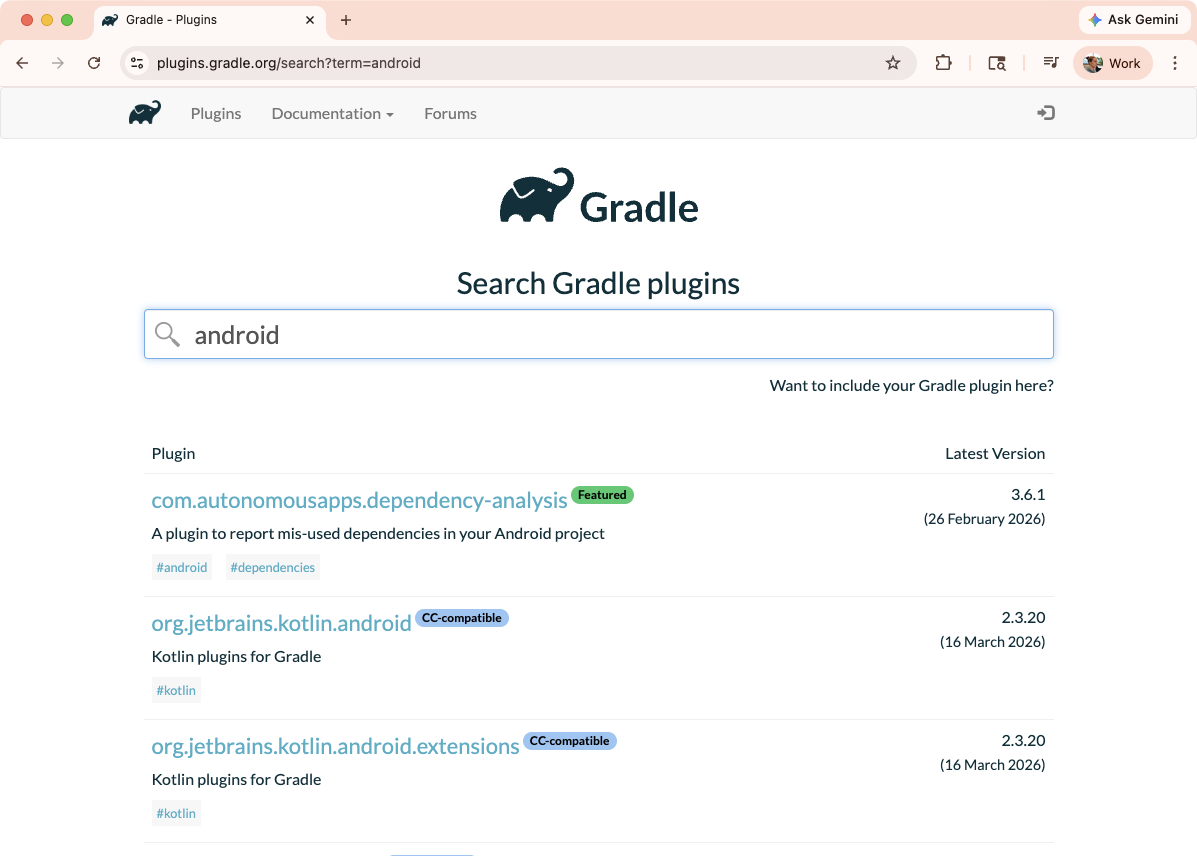
Plugins marked as Configuration Cache-compatible will be promoted in the Plugin Portal search results, helping the community make faster adoption decisions.
Avoid a Supply Chain Disaster #
Locking your dependencies is a good start, but it’s not enough on its own. A new technical deep-dive explores Dependency Drift: how vulnerabilities can slip through even when versions are pinned, and how GitHub and Develocity’s Provenance Governor can block untrusted artifacts before they ever enter your local build cache.
With supply chain attacks on the rise, this is required reading for any team running builds in GitHub’s CI.
From Develocity #
Build is a process, not an action #
Most teams treat their build as a black box; it either passes or fails. In a new post, David Wang argues that this binary view creates a critical observability gap, hiding the real causes of slow builds, cache misses, and redundant work behind unstructured logs.
The fix is treating the build as an observable process: capturing structured execution data across the delivery pipeline so teams and AI agents can reason about root causes rather than guess from symptoms.
From 8-hour builds to 2-hour builds #
You’ve probably heard the phrase, “You can’t improve what you can’t measure.” This was true for CI build and test times for the popular OSS streaming platform, Apache Kafka. This very lack of observability finally led the project committers to hit their breaking point.
In 2025, Kafka underwent a major overhaul, moving from a nearly defunct 8-hour build cycle to evergreen 2-hour builds, thanks to deep build insights and acceleration features from Develocity, combined with a modernized CI pipeline on GitHub Actions.
Upcoming events #
Meet the Gradle team and fellow community members at these upcoming events! We’d love to connect with you to discuss anything related to Gradle Build Tool, Develocity, Developer Productivity Engineering (DPE), or AI’s evolving impact on software development and delivery.
May 20-22, KotlinConf – The official JetBrains conference devoted to the Kotlin programming language.
- Build Tools API: a stable interface for the Kotlin compiler
- 10 Gradle Best Practices Every Kotlin Developer Should Know
- A First Look at the Kotlin Ecosystem Plugin for Declarative Gradle
Spread the word #
We encourage you to share highlights from this newsletter.
Find this and previous editions in the Gradle Newsletter Archive or subscribe via RSS.
The Call for Proposals for the April edition is now open!